
The Accountant’s New Superpower: Analytics for Insight and Impact
-
Presenter: TBC
-
Level: Advanced
-
Study time: 1 Hour
-
Date: 8 October 2026 08:00 - 09:00
Write your awesome label here.
Course overview
Do the following terms leave you cold? Trend analysis. Variance analysis. Ratio analysis. Cash flow pattern recognition. Segmentation analysis. Anomaly detection.
In today’s rapidly evolving financial landscape, data analytics is transforming how accountants and finance professionals work with financial statements. This webinar focuses on practical data analytics procedures applied to financial statements, helping participants move beyond preparation to interpretation and actionable insights. Attendees will learn how to leverage data analytics to:
• Identify trends, anomalies, and patterns in revenues, expenses, and cash flows.
• Compare performance across periods, business units, or industry benchmarks.
• Evaluate ratios, key performance indicators, and financial health metrics using automated and semi-automated tools.
• Detect potential risks, inefficiencies, or opportunities for strategic decision-making.
The session emphasises that while AI may automate aspects of preparation, the accountant’s core value lies in the interpretation of financial data, assessing the broader business context, and providing strategic insight. Participants will see how to reposition themselves as indispensable advisers, using analytics as a tool to enhance judgment rather than replace it. By the end of the webinar, attendees will gain practical skills to extract insights, interpret financial outcomes, and support strategic business decisions, ensuring their relevance in a world increasingly shaped by AI.
In today’s rapidly evolving financial landscape, data analytics is transforming how accountants and finance professionals work with financial statements. This webinar focuses on practical data analytics procedures applied to financial statements, helping participants move beyond preparation to interpretation and actionable insights. Attendees will learn how to leverage data analytics to:
• Identify trends, anomalies, and patterns in revenues, expenses, and cash flows.
• Compare performance across periods, business units, or industry benchmarks.
• Evaluate ratios, key performance indicators, and financial health metrics using automated and semi-automated tools.
• Detect potential risks, inefficiencies, or opportunities for strategic decision-making.
The session emphasises that while AI may automate aspects of preparation, the accountant’s core value lies in the interpretation of financial data, assessing the broader business context, and providing strategic insight. Participants will see how to reposition themselves as indispensable advisers, using analytics as a tool to enhance judgment rather than replace it. By the end of the webinar, attendees will gain practical skills to extract insights, interpret financial outcomes, and support strategic business decisions, ensuring their relevance in a world increasingly shaped by AI.
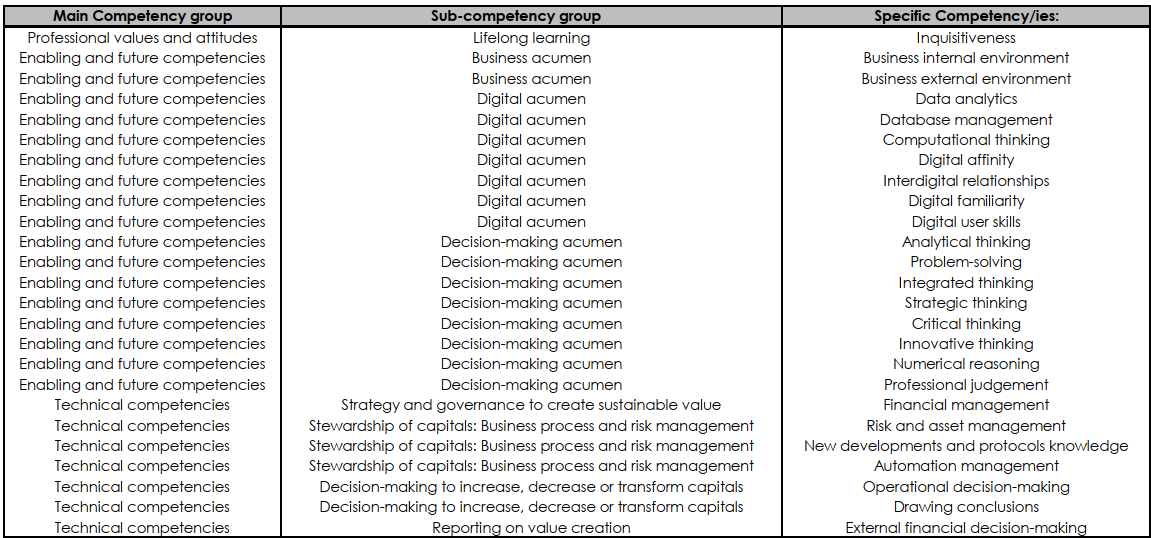
In completing this learning engagement, you will have developed the professional competencies in the green section below.
What's included?
-
1 Live event
-
1 Quiz
-
1 Certificate
Analytics for Insight and Impact
Link with SAICA Competency Framework

Copyright © CPD Campus (Pty) Ltd 2024